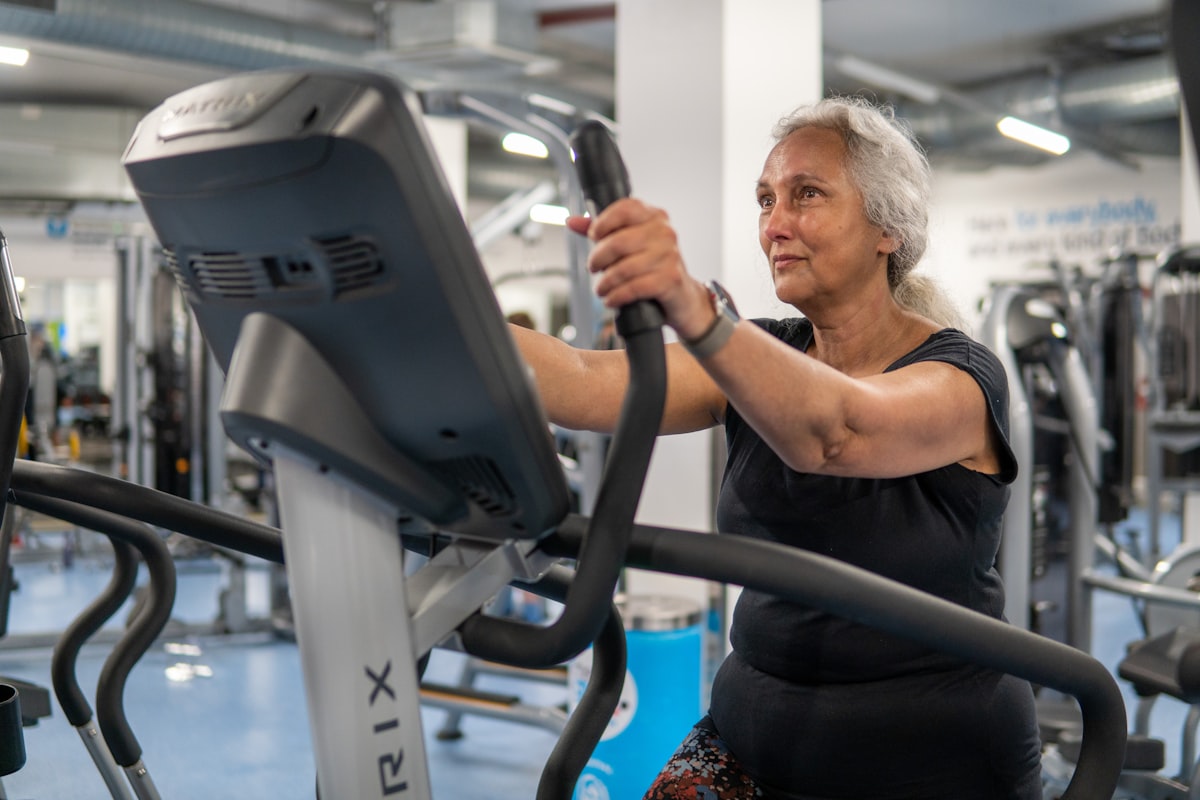
Knee Pain After 50? What to Try Before Considering Surgery
Knee pain after 50 does not always mean surgery. Learn how physiotherapy, strength, activity changes, and a clinical assessment can support knee osteoarthritis.
Your doctor shows you the X-ray and says the words you've been dreading: "bone on bone." You leave the clinic thinking surgery is inevitable. Maybe you stop climbing stairs. Maybe you cancel your morning walk. You rest, because moving must be making it worse, right?
I hear this story from patients every single week. And almost every time, the conclusion they've reached is wrong.
Your X-ray doesn't tell the full story
Most patients don't know this: X-ray findings correlate poorly with how much pain you actually feel. Studies have found that among people with significant radiographic osteoarthritis, only 15–81% report pain. The reverse is also true. Plenty of people with knee pain have normal-looking scans.
Pain comes from multiple sources. Inflammation in the joint lining, muscle weakness changing how load distributes across the knee, central nervous system sensitisation, stress, poor sleep. "Bone on bone" describes one structural finding on a film. It does not determine your pain, your function, or whether you need a surgeon.
The rest trap
When your knee hurts, resting feels logical. Your family says rehat dulu, just rest first. You stop walking. You avoid the stairs. Within weeks, your quadriceps weaken. The muscles that used to stabilise and protect your knee joint aren't doing their job anymore.
Physiotherapists call this the fear-avoidance cycle. Pain triggers fear of movement. Fear leads to avoidance. Avoidance leads to weakness, and weakness produces more pain. Research shows that fear-avoidance beliefs predict disability more reliably than what your X-ray actually looks like. Patients who believe movement causes damage end up more disabled, regardless of their structural findings.
Rest isn't treatment. It makes things worse.
What physiotherapy actually does for knee OA
Physiotherapy for knee osteoarthritis is not "do some exercises and hope for the best." It's a structured programme targeting the specific deficits that are making your knee worse.
A typical plan looks like this:
- Quadriceps strengthening (straight leg raises, terminal knee extensions, wall squats). This is the single most evidence-backed intervention. We rebuild the muscle that absorbs load so your joint doesn't have to.
- Hip strengthening, because weak hip abductors change how your knee tracks. Adding hip work produces better outcomes than quadriceps training alone.
- Balance and neuromuscular training. Proprioception, movement pattern correction. Especially important if you've been compensating for months.
- Load management, which means adjusting your daily activities so you stay active without flaring up. Not bed rest. Smart dosing.
- Education about what's actually happening in your knee, and why movement helps rather than harms.
The 2021 Malaysian Delphi Consensus (a panel of orthopaedic surgeons, rheumatologists, and rehab specialists) recommends exercise, patient education, and weight management as the primary intervention for knee OA. Not as something to try before "real" treatment. As the treatment itself.
The numbers
In one structured knee rehabilitation programme, 76% of patients avoided total knee replacement entirely over the follow-up period. That's what happens when you strengthen the structures around a joint instead of waiting for things to get worse.
Knee OA is common here. A study of older Malaysians found knee pain prevalence of 44.6% among Malays, 31.9% among Indians, and 23.5% among Chinese participants. Yet only about 10% of physician referrals go to physiotherapy first. Most patients arrive at our clinic having already spent years on supplements, traditional remedies, or simply hoping it would go away on its own.
And weight matters more than most people realise. Every kilogram of body weight translates to roughly four kilograms of force through your knee joint. That's not a guilt trip. That's biomechanics, and it means even modest weight loss can make a real difference.
When surgery is the right call
I'm not anti-surgery. Total knee replacement is a good operation for the right patient at the right time. But "the right time" isn't determined by your X-ray alone.
Surgery makes most sense when you've genuinely tried structured exercise for 8–12 weeks, your pain still significantly limits daily function, and your quality of life has deteriorated to the point where the risks of surgery are clearly worth taking.
Even then, patients who do physiotherapy before surgery (prehab) recover faster and leave hospital sooner. The first six months post-op are noticeably easier when you go into the operating theatre with stronger legs.
What to do next
If you've been told you need a knee replacement, or you're living with knee pain and assuming surgery is your only option, consider getting a physiotherapy assessment first. Not instead of your orthopaedic surgeon. Alongside them.
We see patients from Subang Jaya at our Ara Damansara clinic every week who believed their knee was "too far gone." Most of them are walking better within a month, because their knee needed strength, not a scalpel.
You can reach us via WhatsApp or book a consultation directly. No referral needed.
Related articles.
If this piece helped, these will too.

Running Injuries Malaysia: Why It's Not Your Shoes
Running injuries in Malaysia often start after a mileage jump, not a bad shoe. A Subang physio on load, runner's knee, shin pain, and safer return.

Pickleball Injuries Malaysia: Not Easier Badminton
Pickleball injuries in Malaysia often start after three weeks of 'easy' play. A Subang physio on elbow, Achilles, and why volume beats the myth.
Back Pain in Pregnancy: What's Safe and What Helps
Back pain in pregnancy is common, but you do not have to simply endure it. Learn what is safe, when physiotherapy helps, and when to seek medical care.
Book an assessment.
60 minutes. One-to-one with Felicia. Reply on WhatsApp within a few hours.
Message on WhatsApp