ACL Rehab: What to Expect From Physiotherapy After Reconstruction
Stage-by-stage guide to ACL reconstruction recovery in Malaysia — realistic timelines, common mistakes, and why physio is as important as the surgery itself.
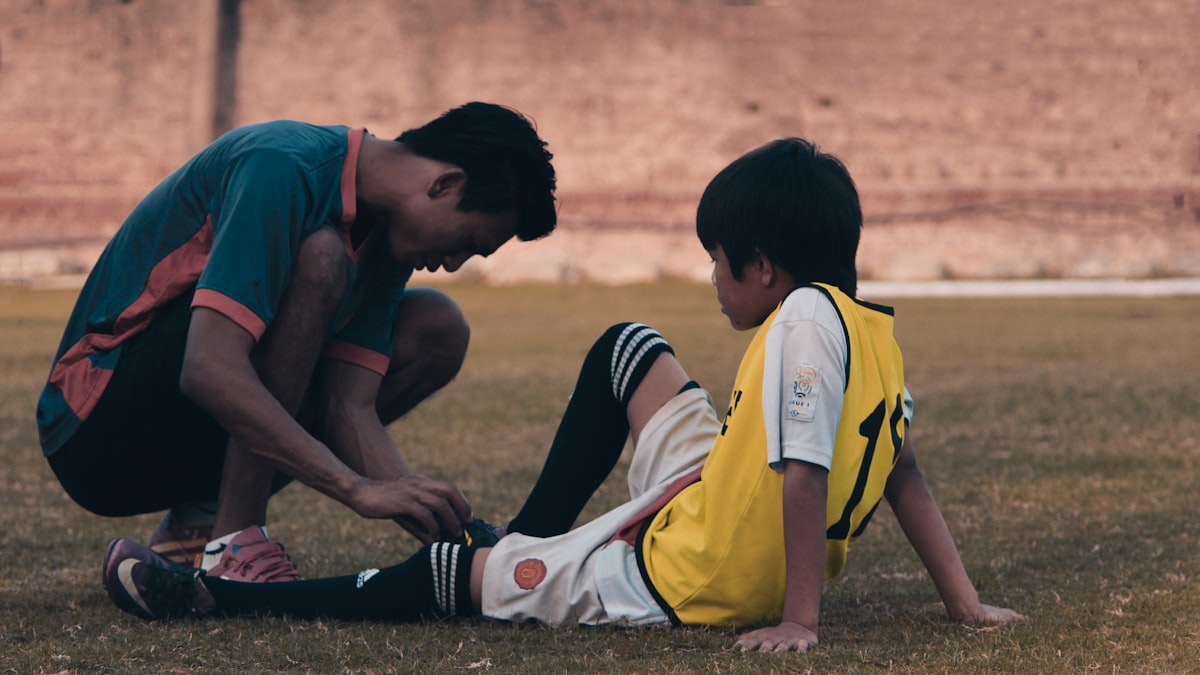
A 22-year-old futsal player lands awkwardly from a jump, feels a pop in his knee, and wakes up three days later from ACL reconstruction surgery with a bandaged leg and no idea what happens next. Surgery went well, he's been told. He goes home with crutches.
That's the moment most patients feel most lost — not during surgery, but after. And the question I hear most often is some version of: the knee is fixed now, right? So what happens?
The surgery is where the reconstruction happens. The rehab is where the recovery actually does.
What ACL reconstruction actually does — and why physio matters
Your anterior cruciate ligament stabilises the knee against rotation and forward movement of the shin bone. When it tears, surgeons reconstruct it using a graft — usually from your patellar tendon, hamstring tendon, or a donor. They are not repairing the original ligament. They're building a new one.
What most patients aren't told: that graft is weakest in the months immediately after surgery. It goes through a process called ligamentisation — gradually being remodelled into something that functions like a ligament. This takes time. Meanwhile, the knee has lost significant muscle strength, proprioception, and neuromuscular coordination.
That's why post-surgical rehabilitation isn't optional follow-up care. It's the other half of the treatment. Without structured physiotherapy, you're returning a graft-dependent knee to activity without the muscular protection to keep it safe.
ACL injuries are common across Malaysia, particularly in futsal and badminton — both require explosive lateral movement and rapid direction changes, which are the exact mechanisms that tear ACLs. If you're a sports injury patient in Petaling Jaya or Subang, you're unlikely to be the first person in your squad who's been through this.
The four phases of ACL rehab
There's no shortcut through these phases. Each one builds the foundation for the next.
Phase 1 — Weeks 0 to 6: Control the basics
The knee is swollen, painful, and inhibited. The priority isn't strength yet — it's getting the basics back.
We work on reducing swelling through elevation and targeted muscle activation. Quadriceps inhibition is a real phenomenon: swelling effectively shuts down the quad's ability to fire. Early quad activation — straight leg raises, quad sets — begins to re-establish that neural connection before it becomes a long-term problem. Range of motion is restored gradually. No twisting, pivoting, or impact.
Goal by end of week six: full passive extension, roughly 120 degrees of flexion, minimal swelling, walking without a limp.
Phase 2 — Weeks 6 to 12: Build the foundation
Strength training begins in earnest — quads, glutes, hamstrings. Closed-chain exercises like squats and leg press load the joint safely while building the muscular protection the graft depends on.
Proprioception work starts here too: balance exercises, single-leg stance, stability board training. The knee's sensory receptors were disrupted by the injury and surgery. Retraining them isn't optional — they're part of what prevents re-injury.
By the end of this phase, many patients begin light jogging on flat ground. Not because twelve weeks have passed. Because their assessment shows they're ready.
Phase 3 — Months 3 to 6: Power and sport-specific movement
With strength returning, the focus shifts to power, agility, and neuromuscular control. Plyometric progressions, lateral movements, deceleration training, direction changes. The specific patterns depend on the sport — a badminton player has different demands from a road cyclist.
This is usually where patients get impatient. They feel good. Pain is minimal. They want back on the court. It's also where the most common serious mistakes happen.
Phase 4 — Months 6 to 12+: Return to sport — on criteria, not a calendar
Six months is not a green light. It's a minimum threshold at which testing begins.
Return-to-sport clearance should be based on objective criteria: strength, hop performance, psychological readiness, sport-specific demands, and functional movement quality. The Aspetar clinical practice guideline recommends a criteria-based return rather than clearance from elapsed time alone.
Pain-free does not mean ready. You can feel completely normal and still have a knee that isn't ready for competitive futsal. The feeling of readiness and the objective state of readiness are not the same thing.
The biggest mistake in ACL recovery
Returning based on time rather than criteria.
"Doctor said I can play after six months" is one of the most common things I hear before a re-injury. What your surgeon means is that six months is the earliest you may be considered — pending assessment. It is not a discharge date.
A re-torn ACL graft is significantly harder to treat. A second reconstruction has lower success rates. The time lost to a second injury is usually measured in years. This isn't meant to be frightening — it's the reason doing the rehab properly the first time genuinely matters.
What good ACL physio actually looks like
More than a sheet of exercises and a weekly check-in.
Good ACL rehabilitation involves regular strength testing to track limb symmetry and identify gaps. Criteria-based progression — not moving to phase three because two months have passed, but because you've met the specific benchmarks for phase two. An honest, evidence-based conversation about when you're actually ready to return to your sport.
It should feel rigorous. If every session feels easy, something is being missed.
If you've had ACL reconstruction — or are planning surgery and want to understand what recovery involves — get in touch before or after the operation. At Pinpoint Physiotherapy in Ara Damansara, we run criteria-based ACL rehab for patients across PJ and Subang Jaya, from early post-surgical through to full return-to-sport clearance.
WhatsApp to book an assessment.
Sources
Related articles.
If this piece helped, these will too.
Side Hip Pain After 40 Is Usually the Glute Tendon
Side hip pain after 40 is often gluteal tendinopathy, not hip bursitis. A steroid shot can quiet it briefly. Gradual tendon loading is the longer plan.
Dry Needling for Sports Recovery: A Physio Explains
Dry needling for sports recovery can ease muscle pain for a short while. A physio on timing, tennis elbow, and why the training week still matters.
Perimenopause Joint Pain: When the Scan Looks Fine
Perimenopause joint pain often shows up before hot flushes in Malaysian women. A clear X-ray does not mean nothing is wrong. Here is what helps.
Book an assessment.
60 minutes. One-to-one with Felicia. Reply on WhatsApp within a few hours.
Message on WhatsApp