
Diabetes Joint Pain Malaysia: Why Sugar Control Isn't Enough
Diabetes joint pain in Malaysia often shows up as frozen shoulder or stiff hands. A Subang Jaya physio explains what to watch and when to act.
You keep your HbA1c appointments. You watch your meals. Then one morning you cannot reach the top shelf, or your finger catches when you make a fist, and you tell yourself it is just age.
I hear that story often from patients with kencing manis. Blood sugar gets careful attention. The shoulders and hands usually do not, until dressing, driving, or prayer starts to hurt.
Diabetes joint pain is common, under-recognised, and treatable when we catch it early. Physiotherapy will not replace your diabetes care. It can restore useful movement when connective tissue has already stiffened.
Malaysia's diabetes load shows up in joints too
About 1 in 5 Malaysian adults has diabetes, based on NHMS 2019 figures around 18.3%. That is one of the higher rates in Asia, and many people remain undiagnosed for years.
Joint and tendon problems are not rare here. Depending on the study, somewhere between a third and most people with type 2 diabetes show some musculoskeletal finding. The upper limb cluster is the one I see most: frozen shoulder, trigger finger, stiff "prayer sign" hands, carpal tunnel symptoms, and Dupuytren-type contractures. Those show up several times more often than in people without diabetes.
If your diabetes review never asks about shoulder reach or hand stiffness, you are not alone. Those checks are still missing from many routine visits.
Why high blood sugar stiffens tendons and capsules
Long-term high sugar leaves advanced glycation end products (AGEs) in collagen. Think of it as extra cross-links that make tendons, joint capsules, and fascia thicker and less springy. Neuropathy can also blunt protective sensation and slow recovery, so a stiff shoulder or catching finger hangs around longer than you expect.
That is why rest alone rarely fixes diabetes joint pain. The tissue has changed. Waiting for it to "loosen with time" usually means more lost range before anyone assesses you.
What diabetes-related joint problems actually look like
Frozen shoulder. Night pain, then a progressive loss of reach and rotation. With diabetes it is more common, often more stubborn, and recovery can drag longer than in non-diabetic adhesive capsulitis. Hard stretching in a highly irritable phase can make things worse. We match mobility work to the stage you are in.
Trigger finger. A catching or locking digit, often with a tender spot at the base of the finger. People with diabetes more often get more than one finger involved. Relative rest, tendon gliding, and sometimes a simple orthosis come first. Fixed locking, or no progress after a proper conservative trial, needs a hand surgeon conversation.
Stiff hands and the prayer sign. Press your palms and fingers together as if praying, wrists slightly extended. Gaps at the knuckles, or a palm that will not sit flat on a table, can signal limited joint mobility. Better sugar control is still the main medical lever. Physio helps with stretching, tendon glides, and daily function. Honest goals matter here: keep grip and reach usable, and catch treatable co-problems early. Full reversal is not something I promise.
Carpal tunnel-type symptoms. Night tingling in the thumb, index, and middle fingers. Morning clumsiness. Dropping objects. Mild intermittent cases may settle with a night wrist orthosis and less provocative activity. Constant numbness or thenar wasting needs medical work-up. Nerve compression and diabetic polyneuropathy can look alike, so guessing from home is a poor plan.
What physiotherapy actually does
When someone with diabetes comes in for shoulder or hand pain, we are not trying to force a dramatic unlock. We map how irritable the tissue is, what range you still have, and whether anything needs urgent medical review. Then we match the programme to that stage.
That often means pain-matched joint mobilisation once the tissue can tolerate it, guided stretches, tendon or nerve glides where appropriate, and a short home plan. We also talk through daily load: phone posture, desk setup, how you put on a baju, and whether night pain needs a pillow under the arm.
We send you back to your GP or endocrinologist when sugar control looks unstable, or when new multi-site stiffness appears with other microvascular concerns. We involve a hand surgeon or orthopaedic colleague when locking, progressive nerve loss, or failed conservative care crosses that line. A hot swollen joint, a rapidly changing foot shape, or a non-healing hand wound is medical urgency, not stretch homework.
Simple checks worth doing before your next review
- Can both arms reach behind your back and above your head roughly equally?
- Does a finger catch or lock when you open and close a fist?
- Do palms and fingers meet cleanly in a prayer position?
- Does night tingling in the thumb-to-middle fingers wake you?
A positive check is not a self-diagnosis. Bring it, and your recent HbA1c notes, to a physiotherapist or your doctor. If you also deal with flare-prone foot or toe pain from gout, say so. Metabolic and joint problems often travel together in Malaysian adults.
Diabetes care that only watches numbers can miss the shoulder you cannot raise and the hand that no longer opens fully. If diabetes joint pain or stiffness is getting in the way of work, dressing, or prayer, WhatsApp us to book an assessment at Pinpoint Physiotherapy in Ara Damansara. We will work with your diabetes plan, not against it.
Related articles.
If this piece helped, these will too.
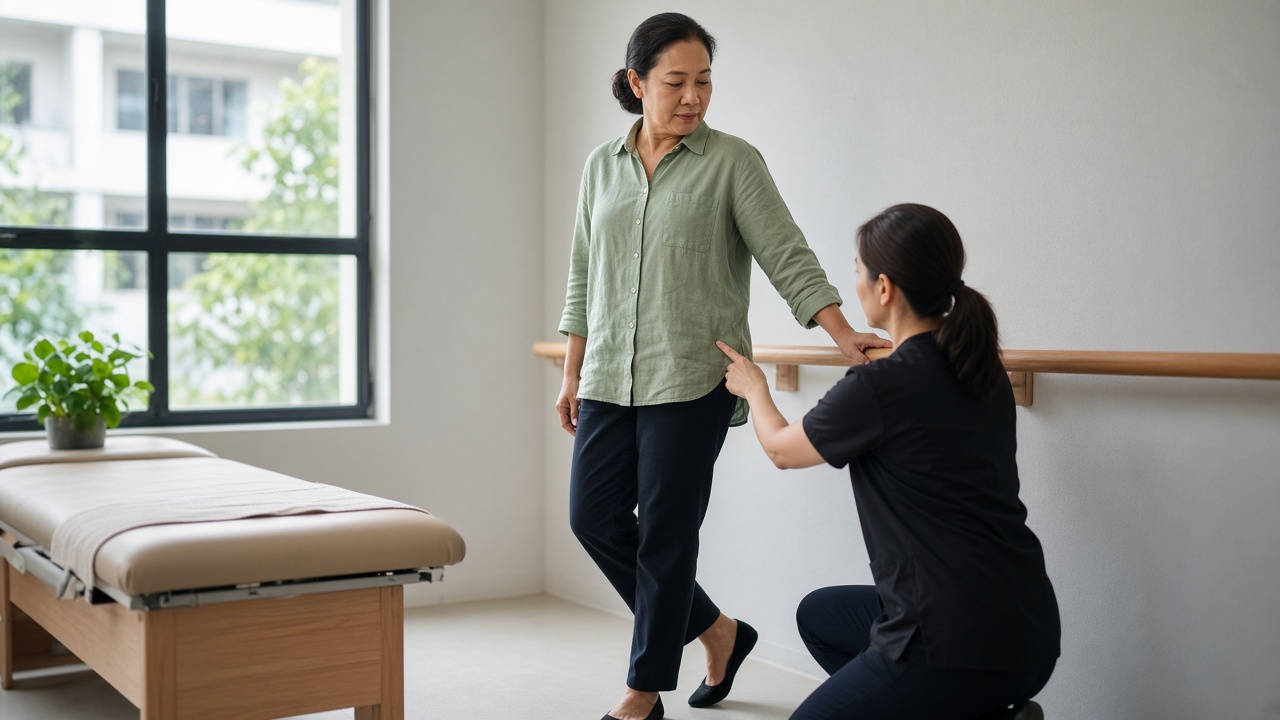
Side Hip Pain After 40 Is Usually the Glute Tendon
Side hip pain after 40 is often gluteal tendinopathy, not hip bursitis. A steroid shot can quiet it briefly. Gradual tendon loading is the longer plan.
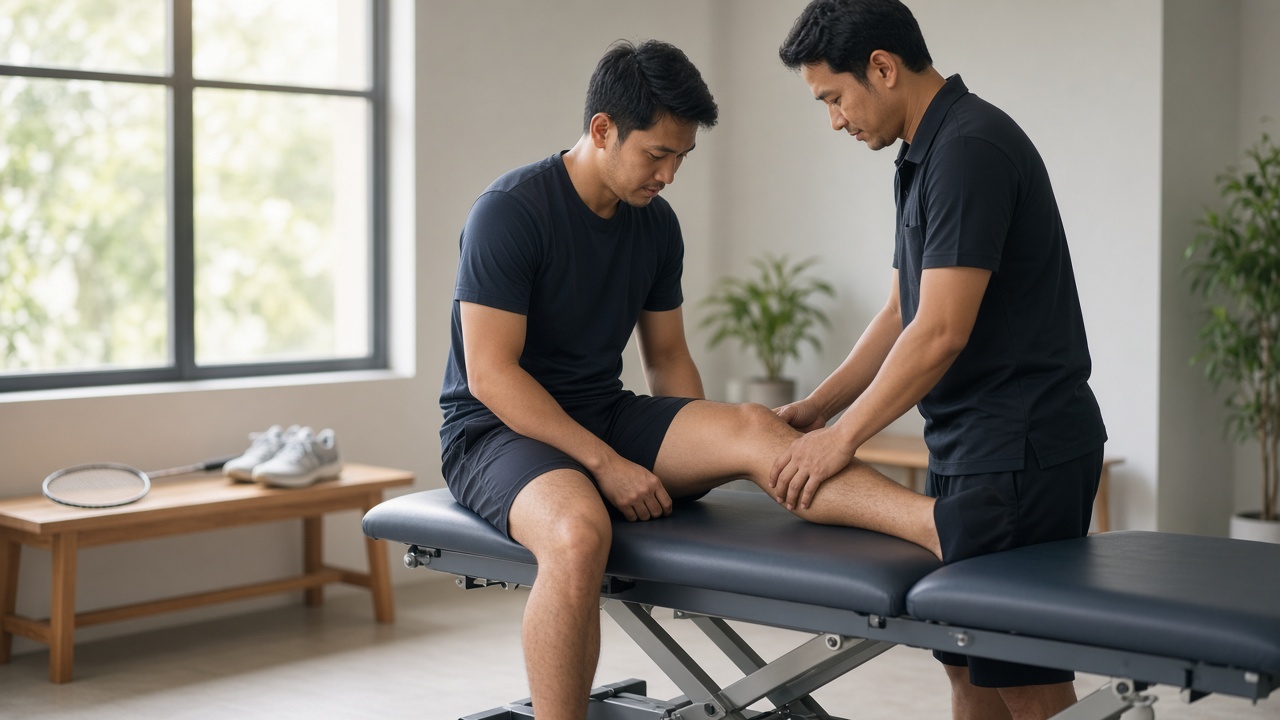
Dry Needling for Sports Recovery: A Physio Explains
Dry needling for sports recovery can ease muscle pain for a short while. A physio on timing, tennis elbow, and why the training week still matters.

Perimenopause Joint Pain: When the Scan Looks Fine
Perimenopause joint pain often shows up before hot flushes in Malaysian women. A clear X-ray does not mean nothing is wrong. Here is what helps.
Book an assessment.
60 minutes. One-to-one with Felicia. Reply on WhatsApp within a few hours.
Message on WhatsApp