Gout in Malaysian Men: What It Does to Your Joints
Gout in Malaysia is more than a painful big toe. Learn how repeated flares damage joints, and where physiotherapy fits between medical care.
A man comes in after his third or fourth “minor” gout attack. The big toe is no longer red and angry, so he assumes it has passed.
But he is still walking differently. His ankle feels stiff. He has stopped pushing off that foot properly when climbing stairs.
That is the part of gout many people miss. The flare gets your attention because it is dramatic. The quieter changes between flares can slowly affect the joint.
Why gout is so common in Malaysian men
Gout happens when uric acid stays high enough for monosodium urate crystals to form in and around joints. When the immune system reacts to those crystals, the joint can become suddenly hot, swollen, red, and extremely painful.
Men are affected more often than women, especially from middle age. In Malaysia, the risk picture is familiar: rich food, long work hours, less movement, heat, dehydration, hypertension, diabetes, obesity, and kidney problems. Gout often sits in the same cluster.
Food is not the whole story, but it can trigger flares when uric acid is already high. Common examples include organ meats, rich broths, shellfish, anchovies or ikan bilis, beer, and sweet drinks.
This does not mean one bowl of soup “causes” a flare. It means these triggers may make attacks more likely, especially with dehydration in our climate.
What happens inside the joint during a flare
During a flare, urate crystals irritate the joint lining and trigger a strong inflammatory response. The joint can become hot, swollen, shiny, and unbearable to touch. Even a bedsheet brushing against the toe may feel too painful.
At this stage, physiotherapy is not about forcing movement or “breaking up” anything inside the joint. Aggressive massage, deep stretching, or hard exercise over a hot, swollen joint is not appropriate.
The priority is protection: reducing painful load, keeping gentle pain-free movement where possible, and helping you walk safely if needed.
Medication matters here. Anti-inflammatory medication, colchicine, steroid treatment, and long-term urate-lowering therapy are medical decisions to discuss with your doctor or rheumatologist. Physiotherapy does not lower uric acid, and it should never be sold that way.
Repeated flares can cause lasting joint damage
The dangerous myth is that this condition is only a series of painful attacks. If the pain settles, many men go back to normal and wait for the next one.
But if uric acid remains high, crystals can keep depositing in joints, tendons, bursae, and soft tissues. Over time, some people develop tophi — firm urate deposits that can deform the joint.
Chronic gout can contribute to cartilage damage, bone erosion, stiffness, tendon irritation, and altered walking mechanics. That is how a “simple” gouty big toe can lead to knee, ankle, or hip overload.
If you avoid pushing through the painful foot for weeks, other joints compensate. Your calf weakens. Your balance changes. Your walking becomes less efficient. The flare may be over, but your movement may not have fully recovered.
This is similar to what we see in other joint conditions: pain changes behaviour, behaviour changes load, and load changes the joint’s capacity. I wrote about this same principle in knee osteoarthritis physiotherapy. It is a different condition, but the rehabilitation logic is related.
Where physiotherapy fits in gout treatment
Good care is shared care. Your doctor manages diagnosis, blood tests, medication, uric acid targets, kidney considerations, and referral to a rheumatologist when needed. Physiotherapy helps with the movement consequences.
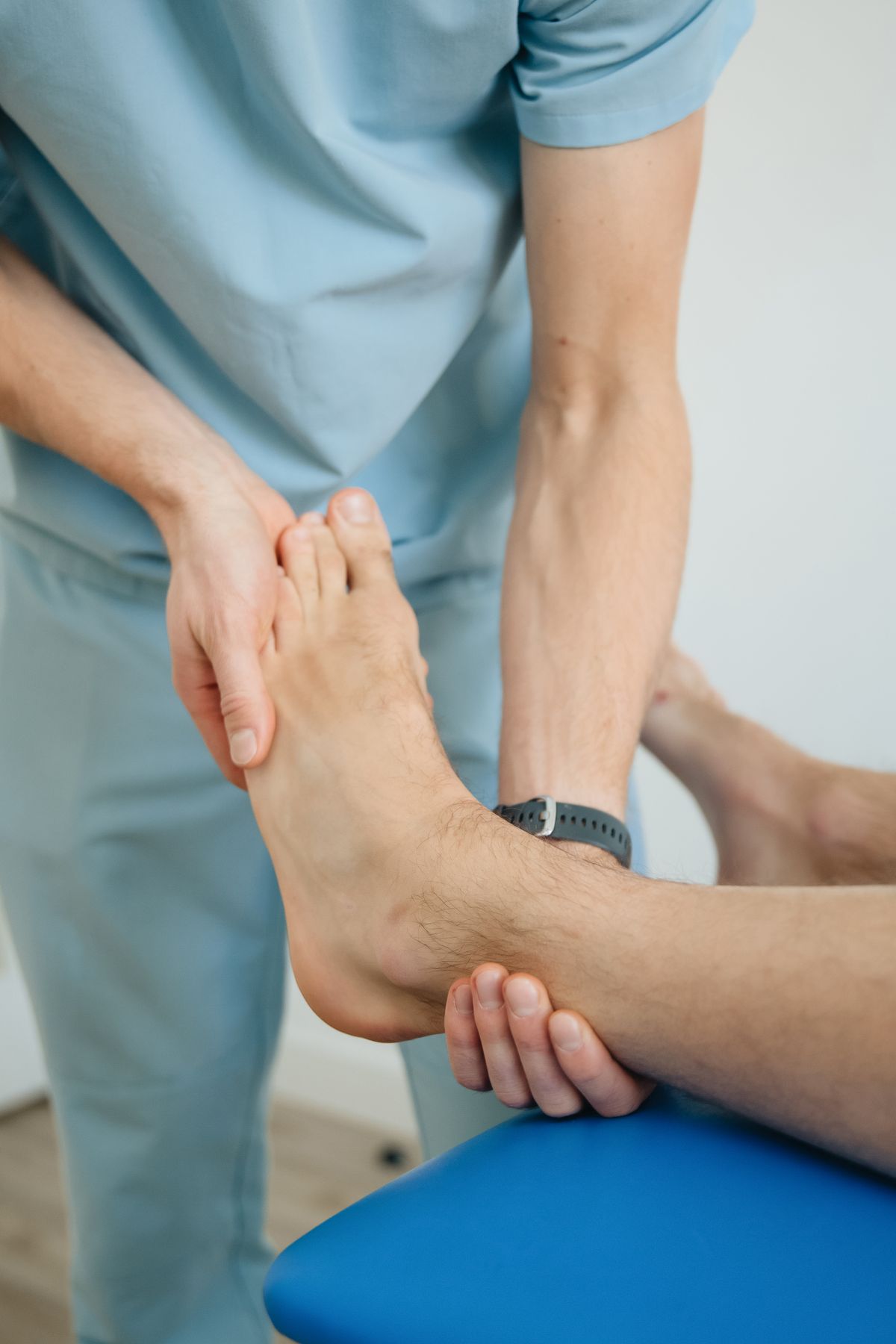
Between and after flares, we assess what the joint has lost: range of motion, leg and foot strength, walking pattern, push-off, balance on stairs, footwear tolerance, and readiness to return to work, gym, badminton, golf, or walking routines.
Treatment may include gentle mobility work, graded strengthening, gait retraining, balance exercises, footwear advice, and a plan for returning to activity. If weight, conditioning, or inactivity is part of the picture, we build a realistic exercise plan — not a punishment plan.
In Malaysia, heat also matters. Dehydration can concentrate uric acid and may contribute to flares in people who are susceptible. If you exercise outdoors, timing and hydration are not small details. Our guide to exercising safely in Malaysian heat covers principles that apply beyond seniors too.
When gout needs medical review first
Please see a doctor urgently if this is your first hot swollen joint, or if you have fever, feel unwell, have a wound nearby, or the pain is unusually severe. A joint infection can look like a flare and should not be missed.
You should also get medical review if attacks keep returning, more than one joint is involved, you notice lumps or deformity, or you have kidney disease. If medication is not controlling the problem, a rheumatologist may be needed for complex or recurrent gout.
For physiotherapy, the right time is usually after the severe flare has settled enough for assessment, or earlier if you need support protecting the joint and moving safely.
Gout is not a character flaw, and it is not just “too much good food.” It is a medical condition with real joint consequences. With the right medical treatment and a sensible rehabilitation plan, many people can reduce the damage, move better, and feel less at the mercy of the next flare.
If repeated attacks have left your foot, ankle, or knee feeling different, contact us via WhatsApp to ask whether physiotherapy is appropriate alongside medical care.
Related articles.
If this piece helped, these will too.
Side Hip Pain After 40 Is Usually the Glute Tendon
Side hip pain after 40 is often gluteal tendinopathy, not hip bursitis. A steroid shot can quiet it briefly. Gradual tendon loading is the longer plan.
Dry Needling for Sports Recovery: A Physio Explains
Dry needling for sports recovery can ease muscle pain for a short while. A physio on timing, tennis elbow, and why the training week still matters.
Perimenopause Joint Pain: When the Scan Looks Fine
Perimenopause joint pain often shows up before hot flushes in Malaysian women. A clear X-ray does not mean nothing is wrong. Here is what helps.
Book an assessment.
60 minutes. One-to-one with Felicia. Reply on WhatsApp within a few hours.
Message on WhatsApp