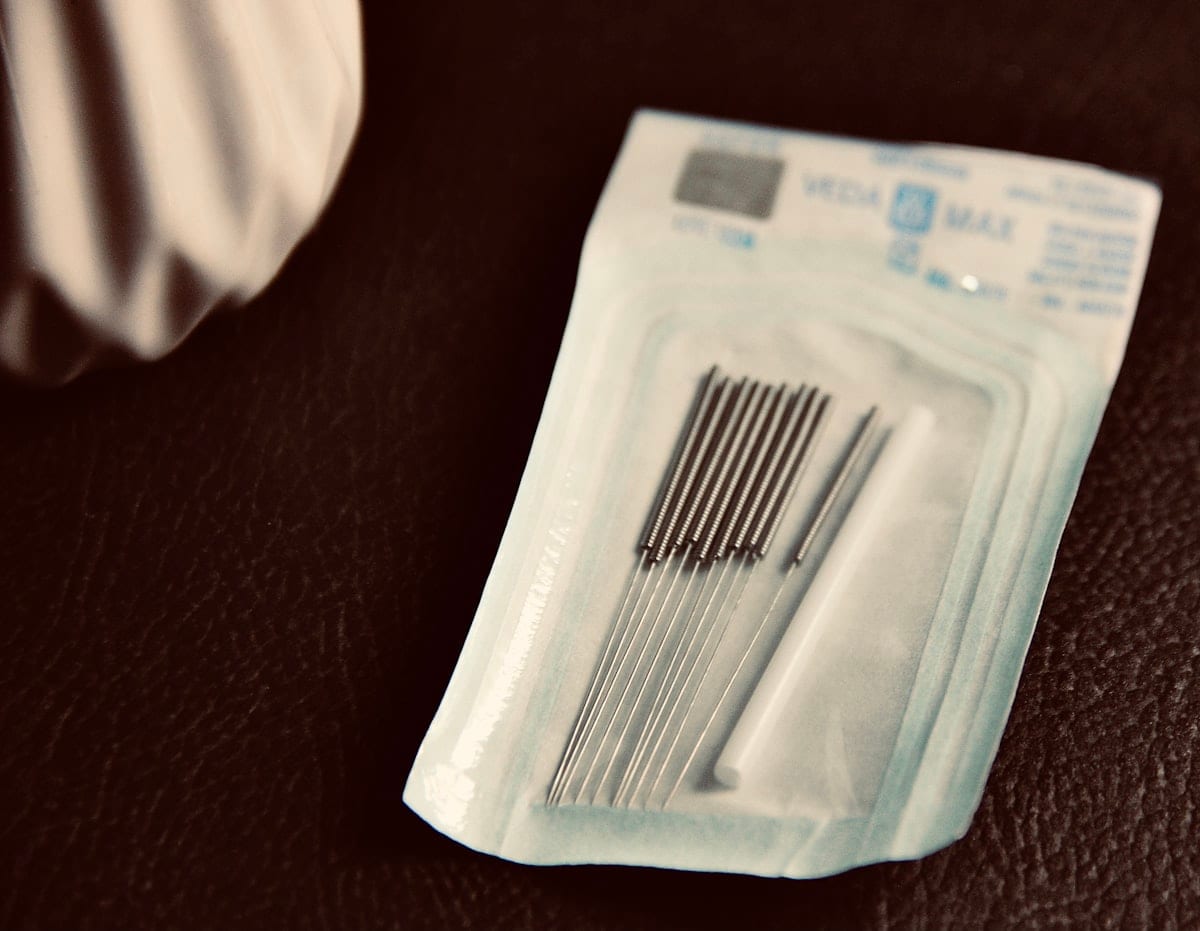
Dry Needling vs. Acupuncture: A Malaysian Physio Explains
Same needle, different science. A Subang Jaya physio explains the difference between dry needling and acupuncture — and when to choose which.
Dry needling and acupuncture use the same thin needle but work from entirely different frameworks. Dry needling is a Western physiotherapy technique targeting myofascial trigger points in muscle, guided by anatomy and physical palpation. Acupuncture is a Traditional Chinese Medicine practice working with meridians and Qi. Same tool, different science — and different regulatory frameworks in Malaysia.
A patient came in a while ago with a stiff, painful neck. She'd heard we offer dry needling and asked, a little cautiously: "Isn't that just acupuncture? My mother sees a sinseh every month and I'm not sure I believe in the Qi thing."
It's a fair question. The needles look identical. They go into your body. So what's actually different?
Same tool, completely different framework.
What Acupuncture Actually Is
Acupuncture is a practice rooted in Traditional Chinese Medicine (TCM), developed over more than two thousand years. Its underlying theory centres on Qi — the body's vital energy — flowing through a network of pathways called meridians. When that flow is blocked or disrupted, illness or pain results. Acupuncture needles are inserted at specific points along these meridians to restore balance and promote healing across body systems.
In Malaysia, acupuncture is formally regulated. Under the Traditional and Complementary Medicine Act 2016, practitioners must register with the T&CM Council and hold recognised qualifications — giving patients a clear level of legal protection.
Acupuncture is used for a broad range of conditions — not only musculoskeletal pain but also insomnia, stress, digestive complaints, headaches, and general wellness. It works at a whole-body, systemic level.
What Dry Needling Is
Dry needling is a Western medical technique grounded in anatomy, neurophysiology, and the science of myofascial trigger points — those tight, hypersensitive knots in muscle tissue that cause local pain and often refer discomfort to other areas. The word "dry" simply means no substance is injected; the needle itself is the instrument.
When a dry needle is inserted into a trigger point, it aims to provoke a brief involuntary muscle twitch — the local twitch response — which disrupts the dysfunctional activity at the motor end plate, improves local blood flow, and resets the muscle's tone. The effect is local and targeted.
A trigger point forms when motor end plates become dysfunctional. They release excessive acetylcholine, and the affected fibres stay in a sustained, low-level contraction. That locks down local circulation and creates a chemical environment that keeps the spot irritable. The needle mechanically interrupts that pattern. Without the twitch, needling a trigger point tends to be less useful; when I'm treating, I'm looking for that response.
In Malaysia, dry needling sits within the scope of physiotherapy — not TCM. Physiotherapists who practise it receive training in anatomical landmarks and safety, but the regulatory framework differs from acupuncture's, and that's worth knowing as a patient.
What dry needling is used for
Trigger points can form in almost any skeletal muscle. The presentations I see most often:
Neck and shoulder tension — tight upper trapezius and levator scapulae from long desk hours. See our back and neck pain page for the wider assessment.
Tension and cervicogenic headaches — many desk-worker headaches start in the upper neck, not the head. Dry needling for cervicogenic headaches covers that pattern.
Lower back pain — quadratus lumborum, gluteals, and piriformis often contribute when sitting is the bulk of the day.
Sports and overuse injuries — hamstring, calf, rotator cuff, and forearm overload. Dry needling sits inside a sports injury plan, not instead of one.
It does not replace the loading and movement work. The needle gives the tissue a chance to reset while we change the pattern that built the trigger points.
What a first session feels like
The first thing we do is assess. I need the pain pattern, which movements provoke or ease it, and where the relevant trigger points are likely to sit. Then I find them by palpation — the taut band and the spot that produces that familiar dull, referred ache.
Needle insertion is usually barely felt; the needles are much thinner than a blood-test needle. The surprise for most people is the twitch: a short, deep cramp lasting a second or two. Between twitches there is often a dull ache that settles quickly. Tell us if anything feels sharp, electrical, or disproportionate — that is not the muscle sensation we are aiming for.
Post-needling soreness for 24 to 48 hours is normal, similar to a hard gym session or a deep sports massage. Water, gentle movement, and heat usually help. Sessions combine needling with manual therapy and exercise.
Acute trigger points often shift within 2 to 3 sessions. Long-standing patterns generally need 4 to 6, alongside the exercise that keeps the change. Dry needling is not used over a local skin infection, and it is modified or avoided with blood thinners, needle phobia that makes treatment impractical, and pregnancy over certain sites.
Serious adverse events are uncommon; safe practice depends on anatomical training and technique (adverse-event review indexed by PubMed).
Why They're Not the Same Thing
The confusion is understandable: same needle, similar sensation. But the philosophies don't overlap.
Acupuncture doesn't require a trigger point to be present at the needle site — points are selected based on meridian maps and TCM diagnosis, sometimes far from the area of pain. Dry needling, by contrast, is entirely guided by palpation and anatomy. We're looking for that taut band in the muscle, the point your body flinches when pressed. There's no energy theory involved.
Neither approach is more legitimate than the other. They're just asking different questions. Acupuncture: what systemic imbalance is contributing here? Dry needling: which muscle is locked up, and how do we release it?
When to Choose Which
Choose dry needling when the problem is primarily muscular — persistent tension headaches originating from the neck, a stubborn shoulder knot that won't resolve with stretching, lower back tightness after long hours at a desk, or restricted movement in a recovering muscle. It's most effective as part of a broader physiotherapy programme, not in isolation.
Choose acupuncture when you're dealing with conditions that go beyond a specific muscle or joint — chronic fatigue, stress-related symptoms, digestive issues, hormonal health, or when you want a holistic approach that addresses the whole person rather than a specific dysfunction.
Some patients use both — dry needling during an active rehabilitation phase, acupuncture for ongoing wellness. They're not competing. A TCM practitioner and a physiotherapist are solving different parts of the same puzzle.
A Word on Patient Safety
With any needle-based therapy, the most important question is: who is inserting the needle, and what are they trained to do? For acupuncture in Malaysia, the regulatory framework gives you a clear answer — look for a registered T&CM practitioner. For dry needling at Pinpoint, Felicia Tung has completed GEMt Level 3 (Advanced Dry Needling) training, and treatment is performed within the scope of physiotherapy practice.
If you'd like clinic details for a first visit, see our dry needling physiotherapy page, including what to expect at an assessment.
Pinpoint Physiotherapy & Rehabilitation is located in Ara Damansara, Petaling Jaya. To find out whether dry needling is right for your condition, contact us via WhatsApp.
Sources
Related articles.
If this piece helped, these will too.
Side Hip Pain After 40 Is Usually the Glute Tendon
Side hip pain after 40 is often gluteal tendinopathy, not hip bursitis. A steroid shot can quiet it briefly. Gradual tendon loading is the longer plan.
Dry Needling for Sports Recovery: A Physio Explains
Dry needling for sports recovery can ease muscle pain for a short while. A physio on timing, tennis elbow, and why the training week still matters.
Perimenopause Joint Pain: When the Scan Looks Fine
Perimenopause joint pain often shows up before hot flushes in Malaysian women. A clear X-ray does not mean nothing is wrong. Here is what helps.
Book an assessment.
60 minutes. One-to-one with Felicia. Reply on WhatsApp within a few hours.
Message on WhatsApp