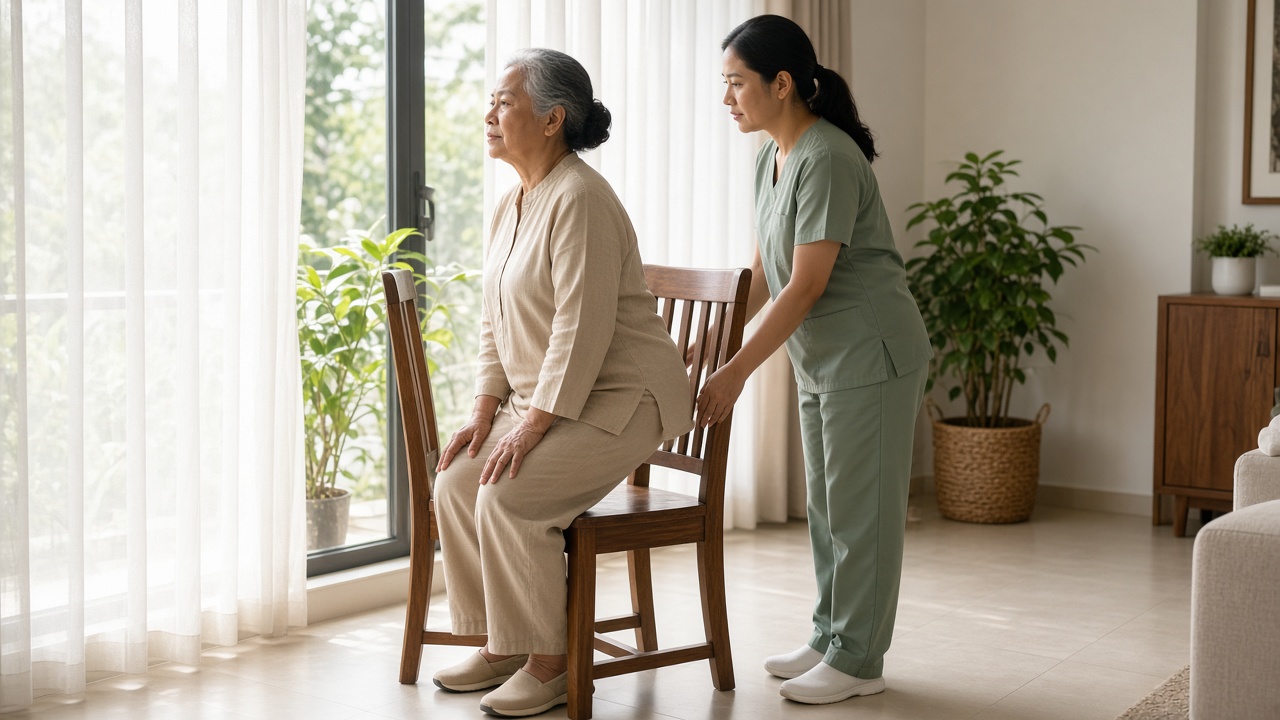
Leaking after 60: pelvic floor physiotherapy helps
Leaking after 60 is common, and pelvic floor physiotherapy can help. See how stress, urgency, and post-prostate leaks are assessed, and what better looks like.
She stopped taking the longer road to the pasar. The drive to her daughter's place meant a pad and a toilet stop she would not explain. At dinner she left the soup. Her son called it age. She had started calling it age too.
Urinary incontinence means urine leaks when you did not choose to let it go. After 60 it is common enough to plan the day around. A pad gets you through the outing. The visit asks why the leak is there.
Malaysia has no single percentage, because the question changes the answer. The 2018 National Health and Morbidity Survey scored adults aged 60 and older for clinically significant leakage. Among women, stress incontinence and urge incontinence each came in around 4%. That score is stricter than "any leak." In a Peninsular community project, about 1 in 5 women over 60 reported any leak, and about 12% of the men reported one. A Klang Valley study of women from age 55, not a national rate, found about 3 in 10 had wet themselves with a cough or before the toilet.
The leak has a type, and so does the walk
- Stress incontinence leaks with a cough, sneeze, laugh, or lift.
- Urgency incontinence leaks with a sudden need you struggle to hold.
- Mixed incontinence is both, in the same person.
Some people leak because the sofa-to-bathroom walk takes too long. The bladder and the legs can both be involved. If the walk itself has slowed, our guide to a slower walk in an older parent is the next piece to read. A long cough, straining, extra weight, years of sitting, and an old birth injury can feed a stress leak. Urgency follows bladder habits, caffeine, some medicines, and prostate changes in men.
What pelvic floor physiotherapy involves
The first visit is a private conversation: when it leaks, the nights, drinks, straining, medicines, surgery, and the outing you have been avoiding. Three ordinary days of a bladder diary beat "it happens a lot." Note the time, the drink, each leak, and whether it was a cough or a rush.
For stress or mixed leakage, NICE and European urology guidance start with supervised pelvic floor muscle training for at least three months. Older women are included. In the stress trials, women who trained were much more likely to report cure or a clear improvement. The steadier result was about one fewer leak a day.
Urgency is a different job. NICE offers bladder training for at least six weeks. You let the urge rise and settle, then slowly space the trips, with a clinician setting the pace. Trials are still uncertain about cure.
One gloved finger tells us whether the pelvic floor can lift, then let go. You can decline the check. History, breathing, and a plan you will try can still start the same day. Feeling a real contraction makes the exercise more precise. If the leak began after a birth and never left, the same ideas are in our postpartum pelvic floor guide.
A phone video skips that check. People push down, hold their breath, or squeeze a floor that will not relax, and the urgency or the heavy feeling gets worse. Pain, a bulge, heaviness, or a stronger urge during a squeeze means stop and be assessed.
Until the visit, keep the diary. When an urge hits, sit if you can, breathe out slowly, and think of something dull for a minute or two, then walk at an ordinary pace. Fewer caffeinated drinks are worth a trial. Keep urine from turning dark unless a doctor has limited your fluids. Easier bowels are worth having too. They have not been shown to stop leaks on their own.
After prostate surgery, leakage is expected early
Poor control is usual in the early weeks after a radical prostatectomy. It generally moves toward the old baseline by 12 months, and it can stay. Pelvic floor training may shorten that wait, and it starts only after the catheter is out. By one year the rates look similar either way. Dryness is not guaranteed. Pads carry you through those weeks. If the leak is still in the way, the urology team can discuss surgery from about six months, and again at a year.
What better looks like, and what cannot wait
At six weeks, more warning counts, and so does a pad that is damp where it used to be soaked. Cough leaks often need the full three months. If nothing has moved, we change the technique, teach a tight floor to relax, review medicines with your doctor, or refer on. A new tablet that arrived with the urgency deserves that conversation before anyone stops it.
Blood in the urine, burning, fever, a bladder that will not empty, or new confusion with urinary symptoms needs a doctor first. New numbness between the thighs, new leg weakness, or a new loss of bladder or bowel control, especially with back pain, needs the emergency department the same day.
If this has stayed private at home, message us on WhatsApp. Pinpoint Physiotherapy is in Ara Damansara. Tell us whether it happens with a cough, a sudden urge, or on the way to the toilet, and whether prostate surgery is part of the story.
Related articles.
If this piece helped, these will too.

Osteoporosis physiotherapy: what exercise can still do
Osteoporosis physiotherapy is more than a bone-density number. See which exercise to keep, what to change, and why stopping activity makes daily life harder.
Dry Needling in Malaysia: What to Ask Before You Book
Dry needling in Malaysia has no licence of its own. A physiotherapist explains what to ask about registration, training, and safety before you book.
Side Hip Pain After 40 Is Usually the Glute Tendon
Side hip pain after 40 is often gluteal tendinopathy, not hip bursitis. A steroid shot can quiet it briefly. Gradual tendon loading is the longer plan.
Book an assessment.
60 minutes. One-to-one with Felicia. Reply on WhatsApp within a few hours.
Message on WhatsApp