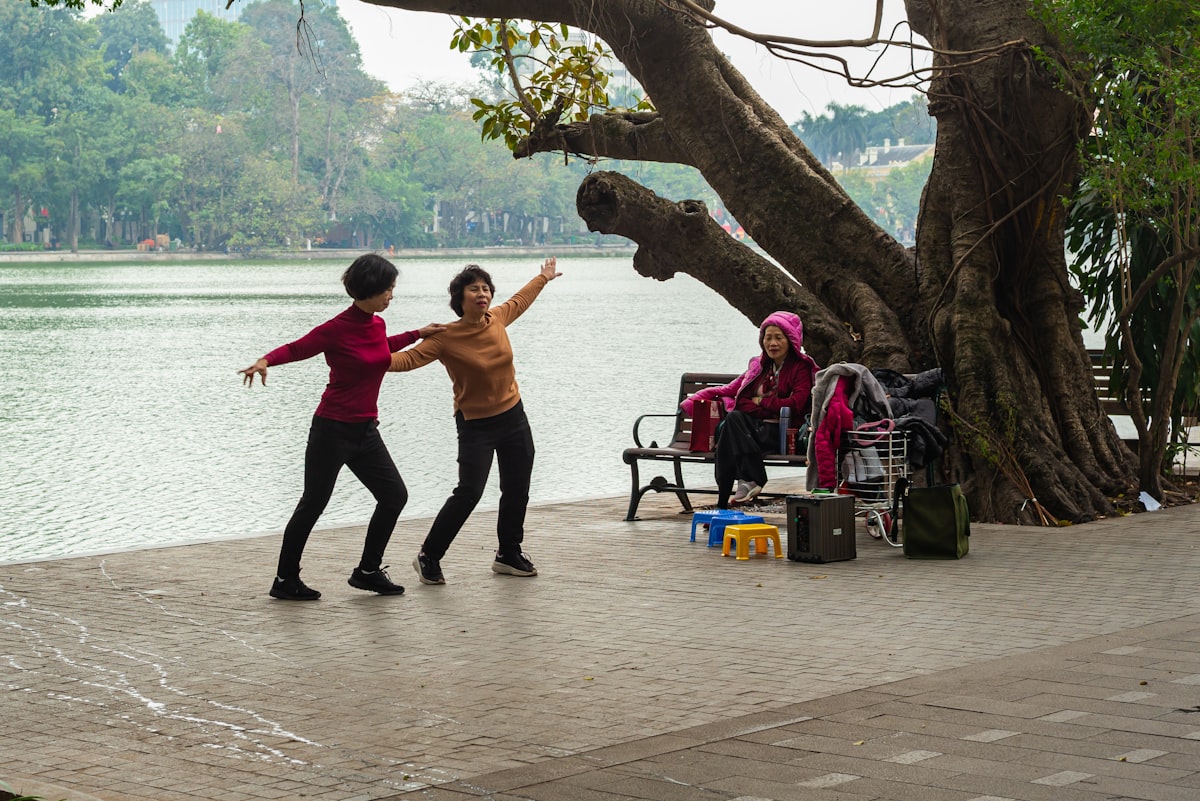
Tai Chi for Seniors: What It Does Well — and Where It Falls Short
Tai chi reduces fall rates by around 23%. But it can't build muscle, load bones, or rehab a specific deficit. A physiotherapist explains what to add.
A patient's daughter brought her father in recently — 71 years old, sharp, active. He'd been doing tai chi every morning at the park for over 15 years. The daughter was worried because he'd had two near-misses in the last few months: once on the stairs, once stepping off a kerb. He wasn't concerned. "I do tai chi every day. My balance is fine."
His balance was fine. But when we did a proper assessment, his hip abductor strength was significantly reduced on both sides, he couldn't rise from a chair without pushing off the armrests, and a bone density report showed moderate osteoporosis in his lumbar spine. Tai chi hadn't caused any of this. But it also hadn't been able to stop it.
I have this conversation often. I'm not here to tell anyone to stop tai chi. It has real, documented clinical value. But it has limits — and understanding those limits is how you build a programme that actually protects you as you age.
What tai chi does well
The evidence on tai chi for fall prevention is solid. Systematic reviews consistently show that regular tai chi practice reduces fall rates in older adults by roughly 20–25%. That's significant. And it comes from something tai chi does exceptionally well: training the nervous system.
The slow, deliberate movement of tai chi forces you to shift weight, maintain single-leg stance, and make continuous small corrections to stay upright. This builds proprioceptive awareness — your body's sense of where it is in space — and trains the automatic balance responses that keep you from going down when you trip.
Consistency matters too. Many of my patients have been doing tai chi for years, sometimes decades. They show up at 7am rain or shine. That discipline, and the social connection of a morning group, are protective. Movement you actually do is better than exercise you don't.
What tai chi cannot do
Families often don't hear this part.
Tai chi cannot prevent or reverse sarcopenia. Muscle requires progressive overload to grow and maintain itself — resistance at a meaningful percentage of your maximum capacity, increased gradually over time. The gentle, low-load movements of tai chi don't come close to providing that stimulus. If your parent's legs are getting noticeably weaker, their walk is slowing, or they struggle to get up from sitting, tai chi is not going to turn that around.
Tai chi cannot manage osteoporosis. Bone responds to mechanical loading — impact forces and high-load resistance. Tai chi's flowing, weight-shifting movements don't generate the forces needed to stimulate bone remodelling. Patients with diagnosed osteoporosis need a targeted programme that includes weight-bearing resistance work, not more slow movement.
Tai chi cannot rehabilitate specific deficits after a fall. When a thorough assessment reveals that someone has weak hip abductors, poor ankle proprioception, or a reaction-time problem on one side, they need exercises that directly target those findings. Generic tai chi, however good, cannot substitute for that.
Signs that someone needs more than tai chi
In an elderly patient already doing tai chi and appearing to do well, I look for:
- One or more falls or near-misses in the past 12 months
- Difficulty rising from a chair without using their arms for push-off
- A noticeably rounded upper back (thoracic kyphosis), which shifts the centre of gravity forward
- Diagnosed osteoporosis or osteopenia, especially with a previous fracture
- Slow, shuffling gait or a noticeable step hesitation going down stairs
- Significant fatigue after a short walk
Any of these signals suggests that tai chi, on its own, is not enough.
What a combined programme looks like
This isn't an either/or choice. The programme I typically recommend:
Continue the morning tai chi — it is doing real work for balance and consistency. Add two sessions per week of physio-prescribed resistance exercises: seated or standing leg press, hip abductor work with resistance bands, heel raises, sit-to-stand progressions. None of these are complicated. Most can be done at home with minimal equipment.
This combination — tai chi for the nervous system and community, resistance work for muscle and bone — is more complete than either alone. Studies on combined programmes in older adults consistently show better outcomes for both strength and fall rates than single-modality training.
For patients already doing regular exercise in Malaysia's heat, we also talk about timing: resistance work is generally better done in a cooler part of the day, indoors if possible.
When to come in for an assessment
If your parent is already doing tai chi, that's a good foundation. But I'd encourage a physiotherapy assessment if any of the signs above apply — or simply if it's been a while since anyone has actually tested their strength, balance, and gait properly.
A proper assessment takes about an hour. It tells you what the tai chi is protecting, what it's not addressing, and what a targeted programme should include. Better than waiting for a fall. You can find out more about what our physiotherapy assessments involve, or reach out directly via WhatsApp.
We work with patients at all levels of fitness, and we start where you are — not where a textbook says you should be.
Related articles.
If this piece helped, these will too.
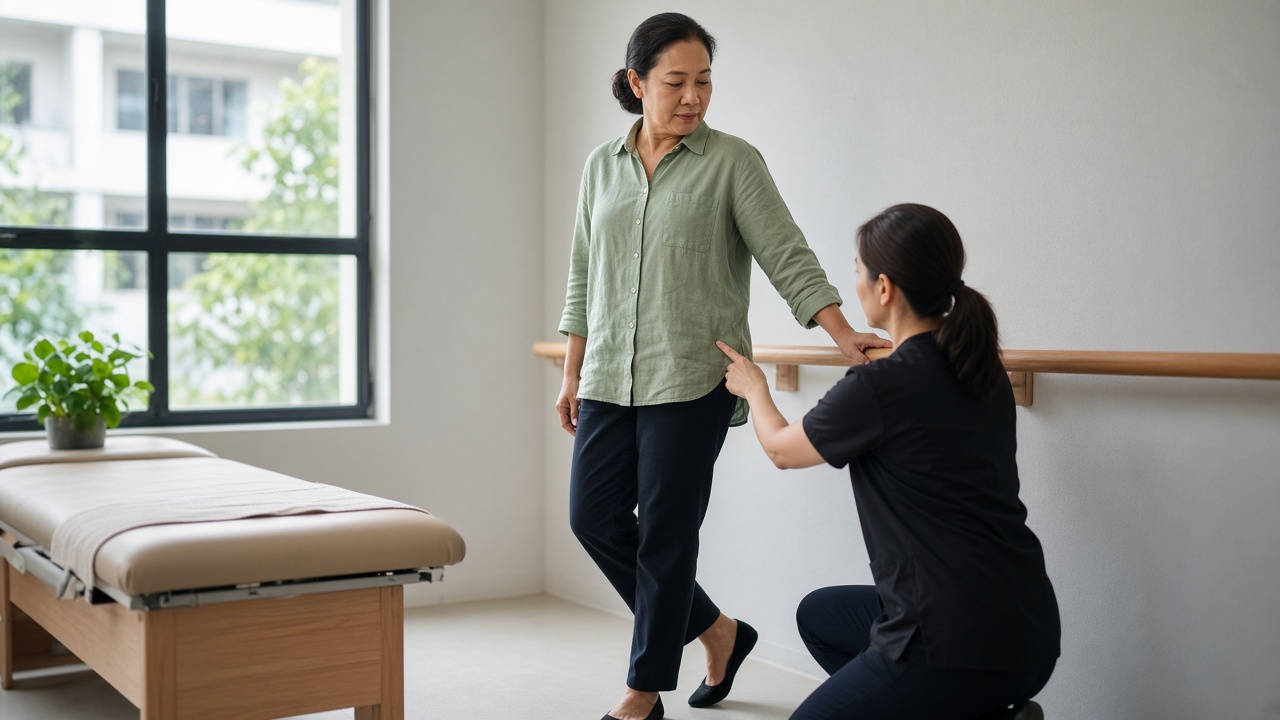
Side Hip Pain After 40 Is Usually the Glute Tendon
Side hip pain after 40 is often gluteal tendinopathy, not hip bursitis. A steroid shot can quiet it briefly. Gradual tendon loading is the longer plan.
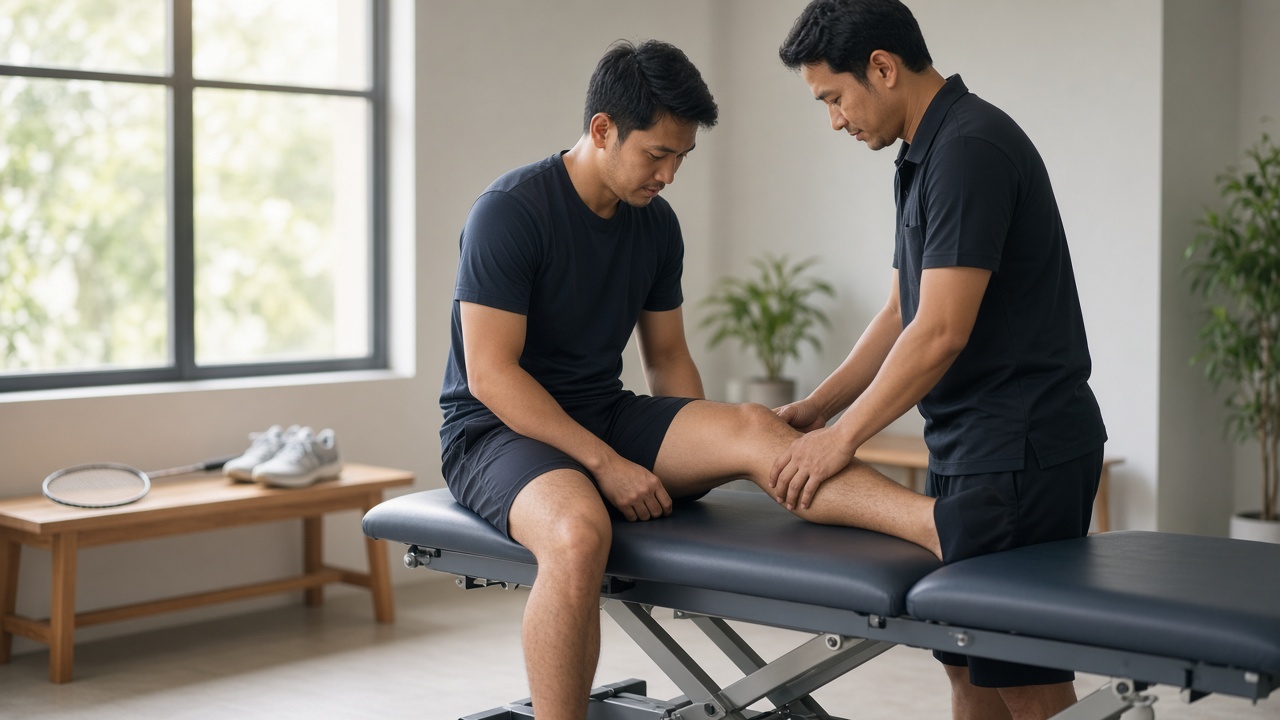
Dry Needling for Sports Recovery: A Physio Explains
Dry needling for sports recovery can ease muscle pain for a short while. A physio on timing, tennis elbow, and why the training week still matters.
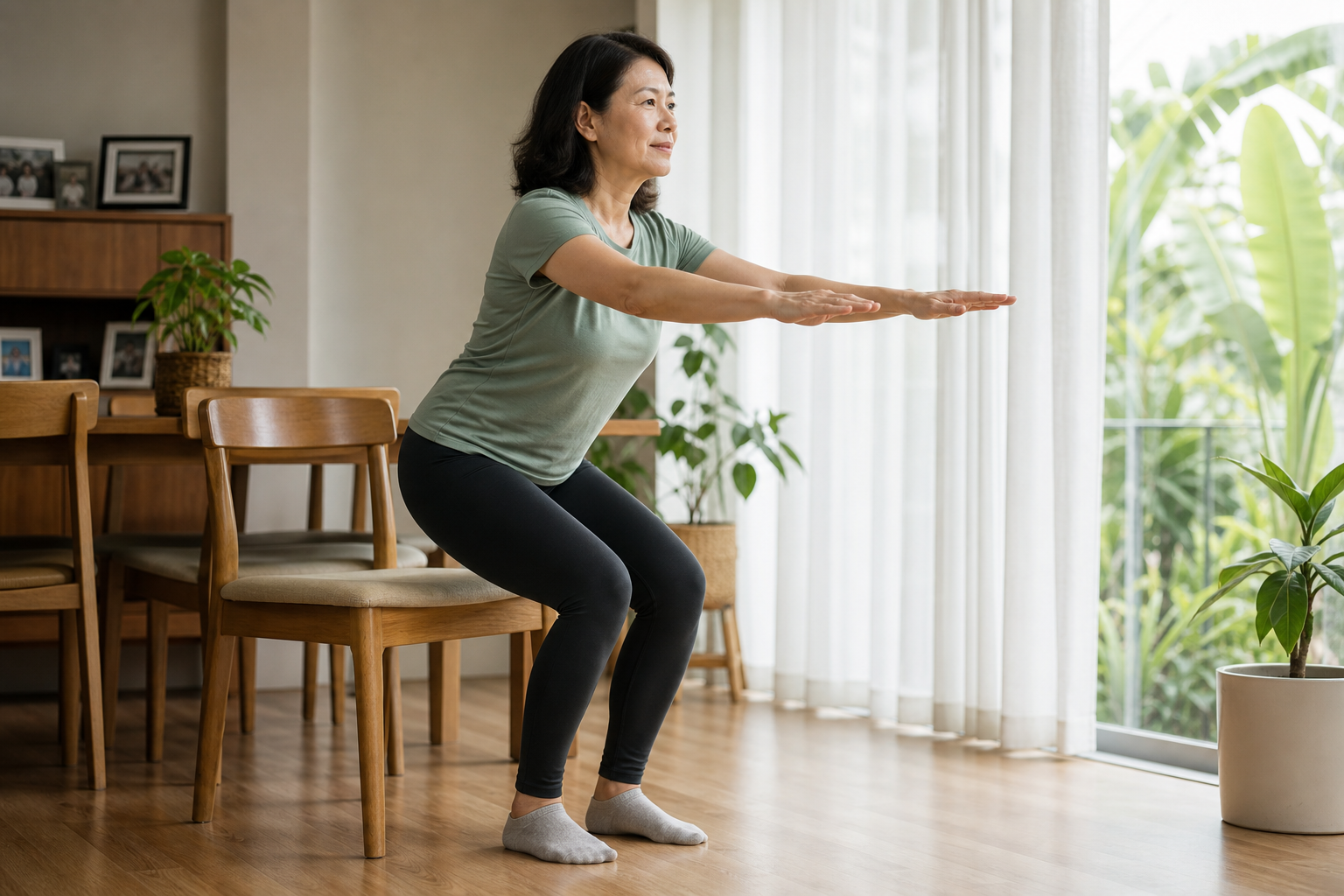
Perimenopause Joint Pain: When the Scan Looks Fine
Perimenopause joint pain often shows up before hot flushes in Malaysian women. A clear X-ray does not mean nothing is wrong. Here is what helps.
Book an assessment.
60 minutes. One-to-one with Felicia. Reply on WhatsApp within a few hours.
Message on WhatsApp