Strength training at 70: parents can still build muscle
Strength training after 70 can still build muscle. See what supervised sessions involve, what improves first, and when a check comes before you start.
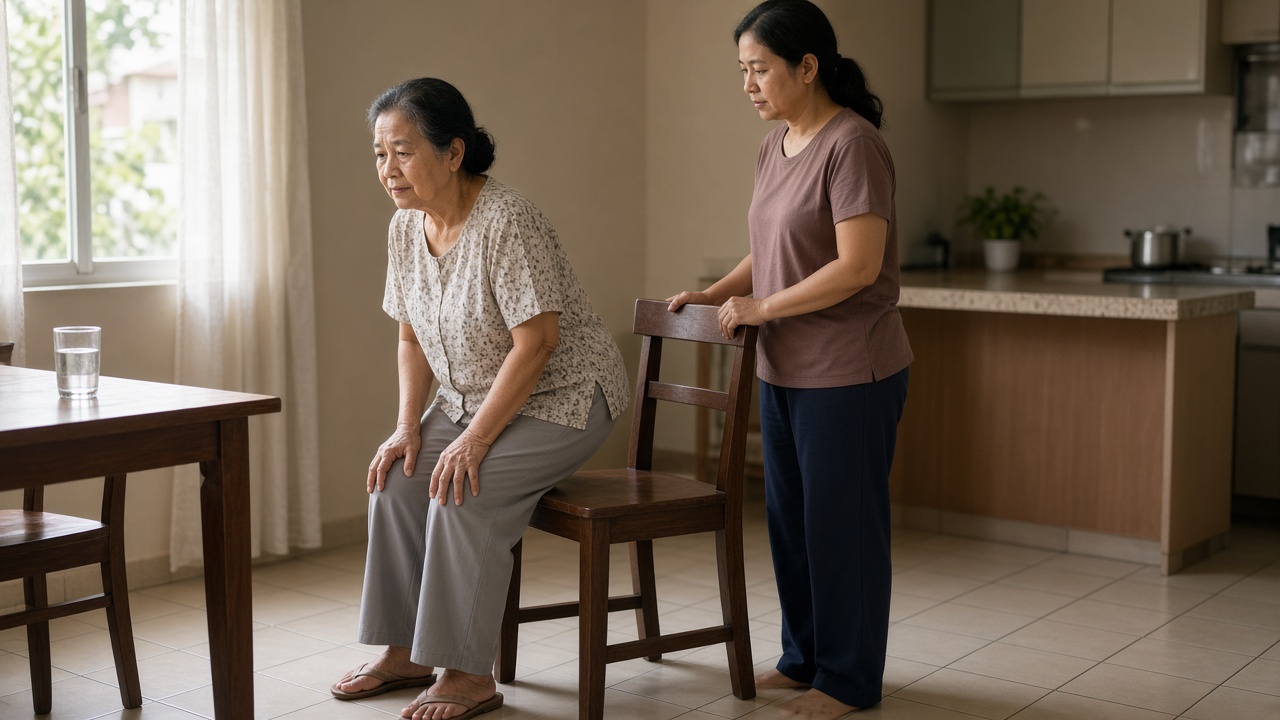
The doorbell goes, and your mother rocks twice before she leaves the sofa. Both hands drive through the armrests. Your uncle, still at the dining table, says she is 70 and should leave weights alone. She already walks to the market. Keep that walk. The muscles that stand her up need their own work.
Strength training at this age can still build muscle. Strength is the change you can count on. Size can increase too, and it is usually the smaller change. A parent who gets off the sofa with less of a heave has already gained something useful.
Muscle can still respond after 70
Past 60, muscle, strength, and easy movement can slip when the legs are rarely asked to work hard. That pattern has a name: sarcopenia. Our guide for Malaysian families sets out the home signs. Grip, a timed chair stand, walking speed, and sometimes a measure of muscle mass are what turn a worry into a label. Studies of adults over 60 in Malaysia find this often enough to take a slow chair-rise seriously. The percentage changes with the definition used, so there is no single national figure to quote at the dinner table.
People watch a parent get weaker and decide the birthday is the reason. The studies that disagree were done with frail nursing-home residents, many in their 80s and 90s. Supervised leg training, three days a week, raised strength in the people who did it. A small early study also showed a small increase in thigh muscle area on a scan. In the larger follow-up, strength was the clear result, and the thigh-size change was too small to be sure of. A 2020 review of trials in adults aged 75 and older found the same shape. Strength gains were large on average, and muscle-size gains were modest.
Some strength can show up within a couple of weeks, before the muscle has had time to grow, because the nervous system gets better at the job. In the trials, strength was usually rechecked after about eight to twelve weeks. When size changed, the scans often came from programmes lasting roughly ten to eighteen weeks. The mirror is a poor scoreboard in the first month.
Malaysia's physical activity guideline for adults 65 and older asks for muscle-strengthening of the major muscle groups, at moderate effort or harder, on at least two days a week. It also asks for mixed balance and strength practice on three or more days. Bands, bodyweight work, and squats are among the examples it gives. If diabetes or high blood pressure is part of the picture, the same booklet says to ask a doctor which activities to do and which to leave out.
Supervised strength training starts at the chair
Start with a sturdy dining chair, a kitchen counter for the hands, and someone watching the first stands. That is what strength training looks like for a parent around 70. A machine or a band can wait until the movement is steady. Two or three days a week, with a rest day between, is a workable rhythm. The last repetitions should feel demanding, with one or two still in reserve. Grinding until nothing will move, or holding the breath to force the lift, is a poor match when blood pressure runs high.
A Universiti Putra Malaysia trial is the closest local picture of that supervised work. Healthy Malaysian women over 65 used seated leg machines twice a week for 12 weeks. On a test of standing up and sitting down five times, the higher-effort group was about two seconds faster on average. The comparison group barely changed. Early muscle soreness was what they recorded. The trial left out osteoporosis, a broken leg in the previous six months, a recent heart attack, and blood pressure above 166/96. Those were healthy women around 70. A frailer parent, or a father with a heart history, needs a plan built for them.
After we have watched someone stand, the first menu is usually ordinary:
- Sit-to-stand from a chair that does not roll. If they already push with their hands, the hands stay on.
- Heel raises at the kitchen counter.
- A wall press, once they can stand away from the counter without swaying.
- A seated curl with a water bottle, so the shopping bag has a practice version.
If they have fallen, or the room feels unsteady, someone stays beside every standing drill until a physiotherapist has seen it. On tile, put the chair against the wall. Keep the strength work indoors when the afternoon is hot, and save a walk for earlier or later in the day.
Daily tasks change before the tape measure does
Often the sofa needs less of a heave. Getting off the toilet takes less arranging. The grocery bag is easier to bring in from the car. Across trials in older adults, rising from a chair improves more clearly than walking speed. Speed does tend to pick up, by about 0.08 metres per second in a large review, and that review calls the change modest. If the walk has already slowed, our guide to a slower walk is the next piece to read. A stronger leg and a slower walk can show up together, and the walk can have another cause.
Programmes that reduce falls in people over 60 usually practise balance, sometimes with strength work beside it. Strength training on its own has an uncertain effect on how often someone falls. We still train the legs. Those muscles are what catch a stumble. Balance practice belongs in the same week.
Where fracture risk is high, the bone medicine stays in place. Supervised strength work can still support bone density in the right person; our osteoporosis physiotherapy guide explains which movements to keep and which spinal bends to adjust first. A heavy deadlift copied from a bone-density study is a decision we make after a screen, for a particular spine, with coaching on the day. Leave it off the first homework list. If persistent knee or back discomfort has slowed your parent down beforehand, see why pain after 60 shouldn't just be blamed on age.
Progress one change at a time, and only when the current version looks calm: a few more repetitions, a slower lower, one hand on the chair instead of two, then a slightly heavier bottle. A good week is a reason to repeat the week.
Why does your body ache more as you get older?
Aching more with age is common, and it is easy to explain away when friends have similar complaints. Age alone does not explain why a knee hurts or why reaching the clothesline has become difficult. Knee osteoarthritis, persistent lower back pain, hip stiffness and shoulder aches can all affect daily life in later years. They do not all need the same treatment. Describing osteoarthritis only as "wear and tear" can make movement sound dangerous.
When walking hurts, cutting the walk short is understandable. Over time, you may stop going out altogether. For uncomplicated back pain, staying active and avoiding prolonged bed rest is the advice in why pain after 60 shouldn't just be blamed on age. A new hot, swollen joint, a sudden loss of movement, or pain after a fall needs a different assessment. Do not diagnose yourself from your age or a relative's experience.
Get this checked before the effort climbs
Tell a doctor, and tell us, before the legs are loaded if any of these apply:
- Unstable heart symptoms, or blood pressure still above 180/110.
- A fracture in recent months, or new mid-back pain after an ordinary bend, cough, or lift.
- A joint that gives way, locks, or will not take weight. A replaced knee follows the surgeon's plan.
- Repeated falls, a blackout, or dizziness on standing.
- Diabetic eye disease, if heavy straining has already been flagged.
Stable knee arthritis, and being frail, are reasons to adjust the exercise and supervise the first sessions. Bring the medicine list. We watch the stand, the turn, and how the hands are used, then you go home with a short list and the stop signs.
Stop and get help for chest pain or pressure, new severe breathlessness, fainting, or a heartbeat that suddenly races or stumbles. A calf that swells and hurts on one side needs a same-day check. Next-day muscle ache after a new effort often settles. Sharp pain during the movement means that exercise changes.
If you would like this looked at before anyone turns the sofa into a training plan, message us on WhatsApp. Pinpoint Physiotherapy is in Ara Damansara. Tell us which chair they struggle with, and whether they have fallen this year.
Related articles.
If this piece helped, these will too.
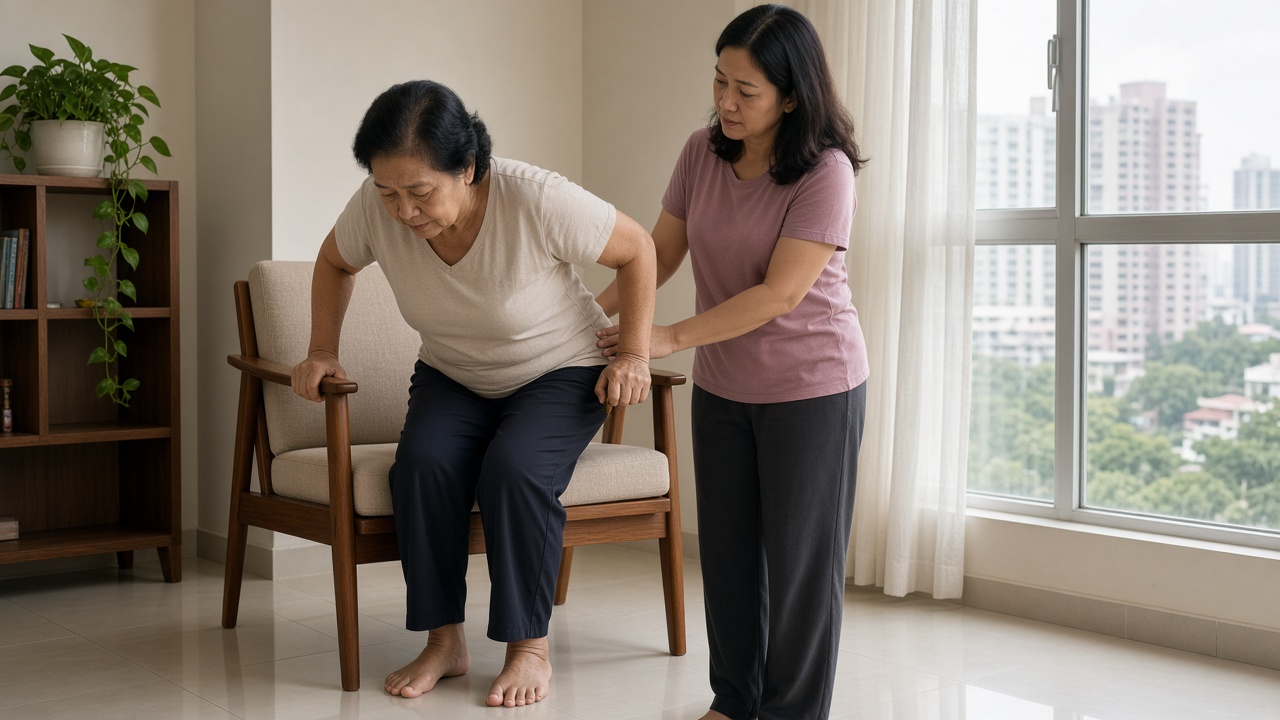
How to help your elderly parent move safely at home
Help an elderly parent move safely by letting them push up while you steady. What to change for the chair, toilet, car, and a fall on the floor.

Elderly parent walking slowly? When to get it checked
An elderly parent walking slowly may need more than extra rest. Learn which gait changes to notice, when to seek help, and how physiotherapy may help.
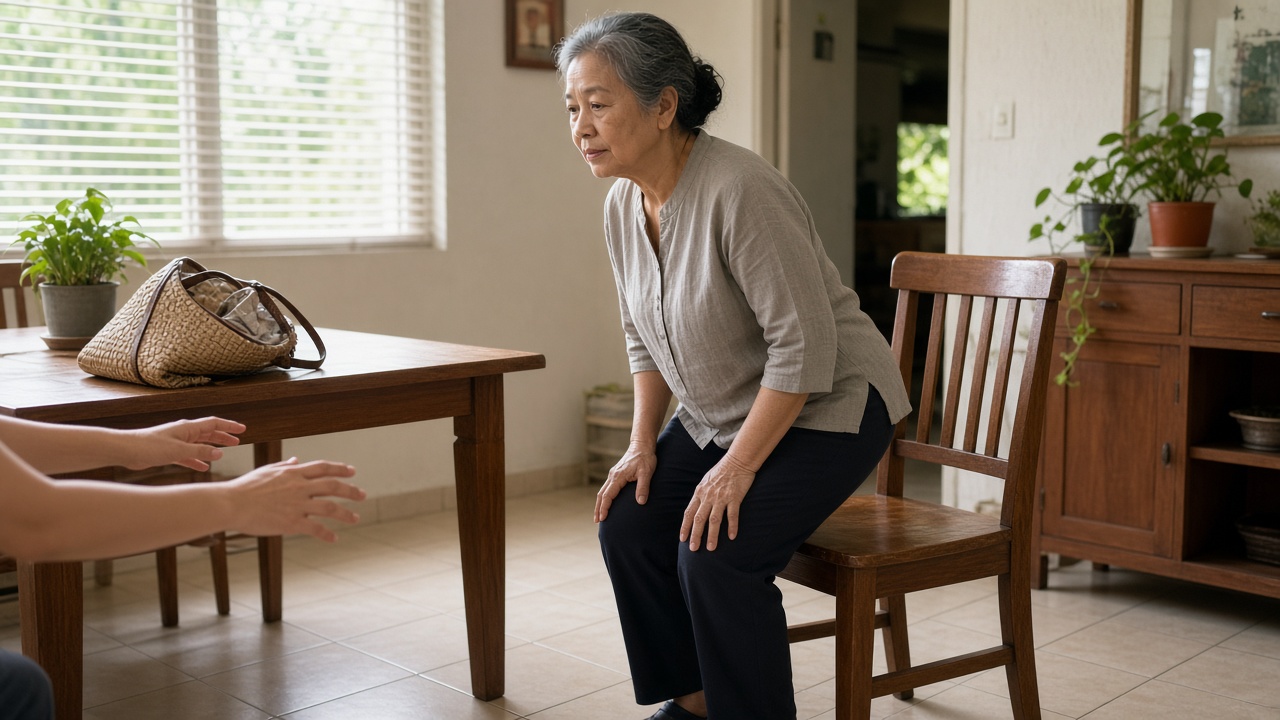
Pain after 60: Why age alone shouldn't explain it away
Pain after 60 deserves more than 'it's just age'. Learn when to seek medical help, how physiotherapy may help, and what realistic progress can look like.
Book an assessment.
60 minutes. One-to-one with Felicia. Reply on WhatsApp within a few hours.
Message on WhatsApp