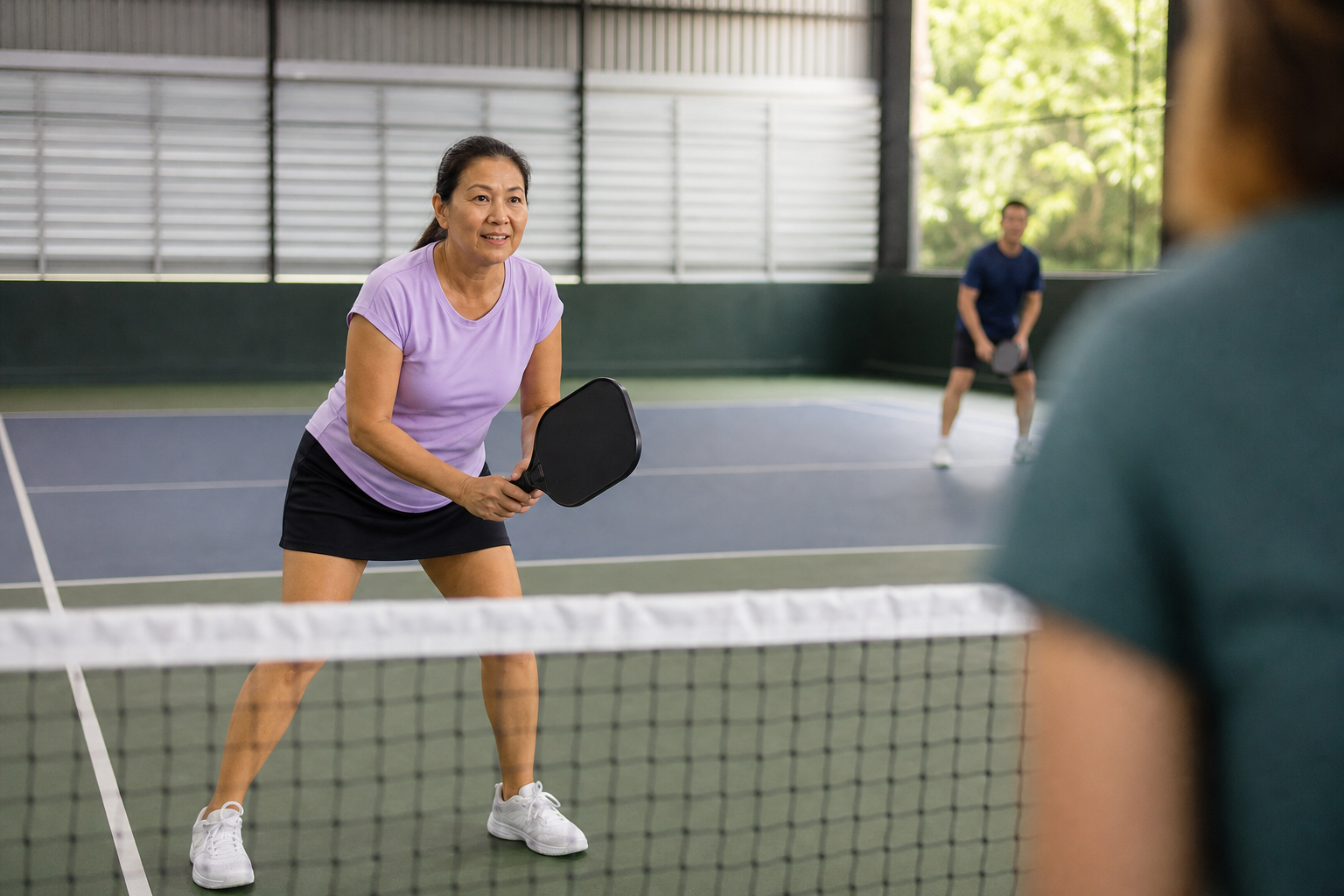
Pickleball Injuries Malaysia: Not Easier Badminton
Pickleball injuries in Malaysia often start after three weeks of 'easy' play. A Subang physio on elbow, Achilles, and why volume beats the myth.
You switched because badminton felt too intense. Friends said pickleball is gentler: smaller court, underhand serve, more chat between points. Three weeks later the outside of your elbow burns when you lift a kettle, and you are wondering how a "mellow" sport did that.
I hear that story from players booking USJ and Subang halls. Indoor venues filled because air-con beats outdoor heat. Community courts at USJ14 and USJ16, converted badminton floors, places like Dink Arena, Tomaz, and Giant USJ. Two-hour slots. Often people who told themselves they were done with hard sport.
The pickleball injuries we see in Malaysia are rarely mysterious. The myth is the problem. Per session it can feel softer than badminton. Per week, many people play more, so tendon load climbs.
Why this is not easier badminton
Badminton asks for overhead smash volume and deep lunges. Pickleball asks for something else: dense lateral cuts, sudden stops on hard courts, long stretches of dinking at the kitchen line, and a grip that never quite relaxes.
A soft ball and a light paddle do not equal low load. Stiffer carbon paddles and a death grip send more vibration into the wrist, elbow, and shoulder. The serve is underhand. The braking, cutting, and sustained forearm work are not.
If you came from badminton, skill transfer helps. Tissue capacity does not arrive with the WhatsApp booking. Our note on badminton injury treatment covers smash and lunge load. Pickleball is a different load profile on the same tendons.
What shows up after a few weeks
In clinic the pattern is familiar. Outside elbow pain after long dink sessions, what people call pickleball elbow. Irritable rotator cuff after overheads and reaches. Morning Achilles stiffness after night hall sessions. Ankle rolls on hard-court cuts. Knee overload from repeated deceleration. Occasional FOOSH falls that leave the wrist swollen or deformed.
A large survey of recreational players (mean age in the early sixties) found roughly two-thirds reported some injury complaint over a year. Knees, shoulders, backs, and elbows led the list. Higher weekly play and less than five years of experience raised risk. Low interest in prevention did too.
The group I worry about most says the same line: "If my body can't do badminton, pickleball lor." Then they book four or five nights because it feels social, not like training.
The weekly load problem
Tendons recover on a clock. Heavy energy-storage work often needs a day or two before you pile on another long session. A "gentle" ninety minutes repeated back-to-back outruns that clock.
Two other stories show up beside the ex-badminton switch. Peri-menopausal players notice the same paddle volume that felt fine at forty now flares the elbow or Achilles. Capacity dropped. You did not suddenly become fragile. And people on GLP-1 pens who feel lighter sometimes jump into nightly court time because clothes fit. Lighter on the scale is not the same as calf, cuff, and grip ready for hard-court cuts. We wrote about that pattern in Ozempic muscle loss and physiotherapy.
Rest, urut, and a pharmacy strap can quiet symptoms for a weekend. They do not rebuild tendon capacity. Pain returns when you fill the next two-hour booking.
Before your next booking
Warm up for real, ten to fifteen minutes. Calf raises or ankle rocks. Side shuffles and a few soft decelerations. Light cuff work. Easy grip and wrist prep with the paddle. Two arm circles then smash is not a plan.
Between sessions, build the bits the sport keeps asking for: slow calf raises, short grip isometrics that stay under mild discomfort, lateral hip work, light band external rotation. Court shoes with lateral support beat running shoes on warehouse floors. Soften the death grip on dinks. If you are new or returning, do not open with three full two-hour slots. Play forty-five to sixty minutes inside the booking for the first weeks, leave easy days between hard nights, and add time before you add smash volume.
If the elbow or Achilles is already irritable, cut session length and intensity first. Keep soft dinks or walk-pain-free calf loading. Ramp over weeks. "Rest until the weekend tournament" then full doubles is how flares become stuck.
When to stop and get assessed
Mild delayed soreness that eases as you warm up can be monitored with less volume. Stop and get assessed if pain changes how you move, worsens mid-session, wakes you at night, or leaves long morning stiffness.
Leave the court and seek urgent care for a sudden calf pop, kettle-like Achilles pain, inability to push off, a wrist that looks wrong after a fall, or a shoulder that suddenly will not lift. Do not strap and finish the slot.
If you play in Subang, USJ, or nearby and pickleball stopped feeling mellow, WhatsApp us to book at Pinpoint Physiotherapy in Ara Damansara. We will not ban the sport. We will help you rebuild capacity so the next booking matches the body you have this month.
Related articles.
If this piece helped, these will too.
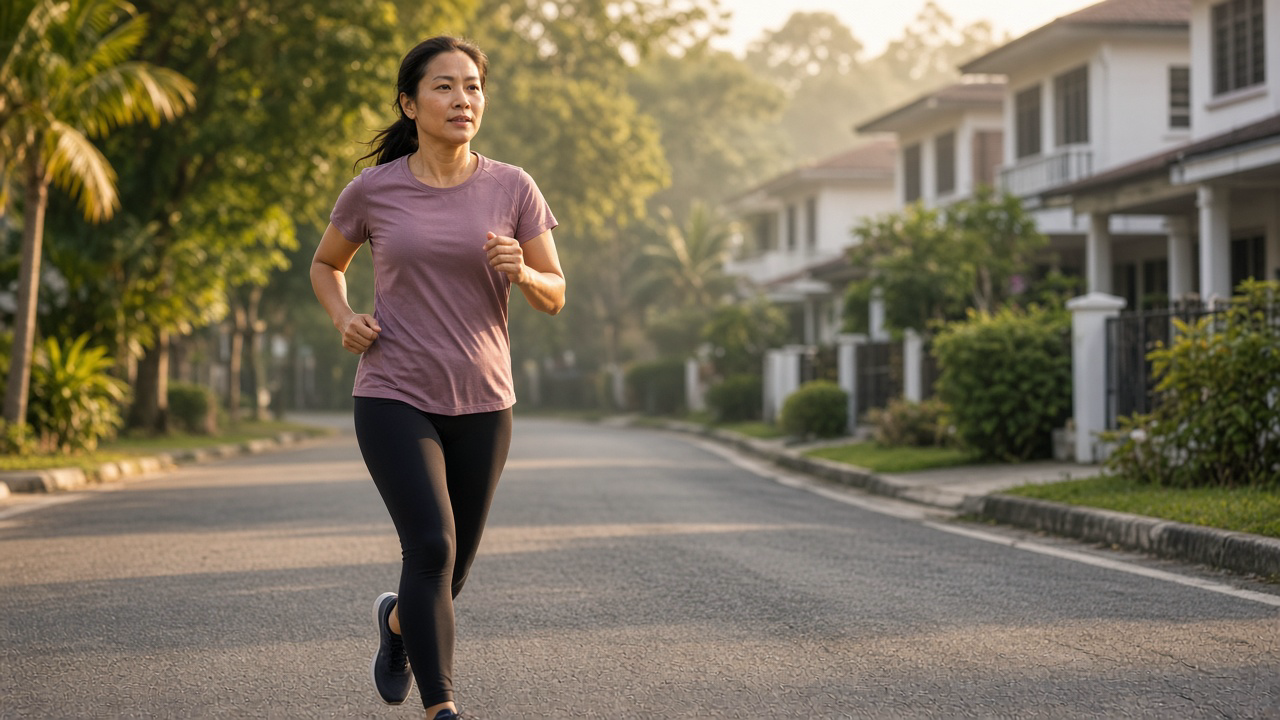
Running Injuries Malaysia: Why It's Not Your Shoes
Running injuries in Malaysia often start after a mileage jump, not a bad shoe. A Subang physio on load, runner's knee, shin pain, and safer return.
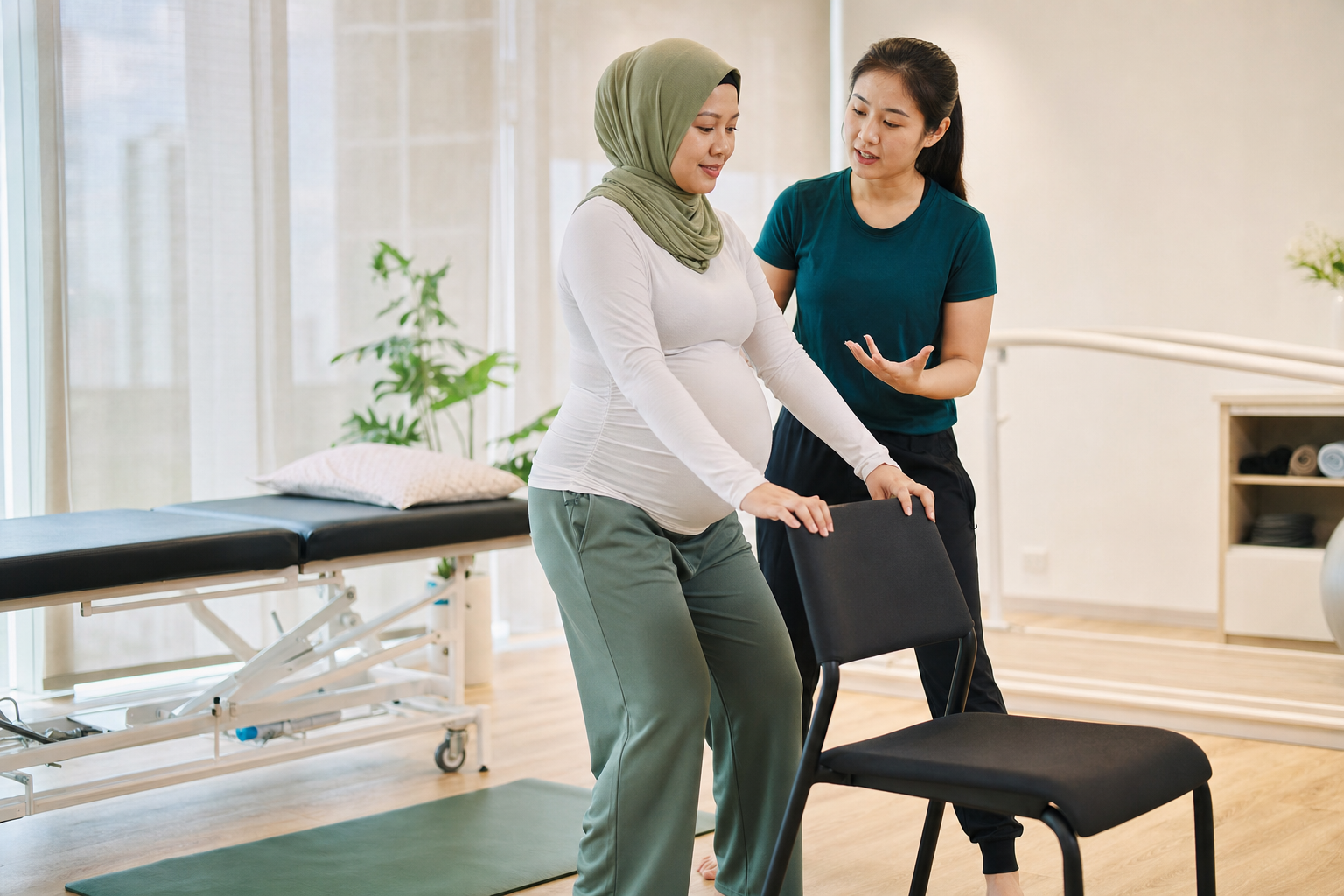
Back Pain in Pregnancy: What's Safe and What Helps
Back pain in pregnancy is common, but you do not have to simply endure it. Learn what is safe, when physiotherapy helps, and when to seek medical care.

You Don't Have to Wait for a Fall: What Physiotherapy Can Do Right Now
Most people only see a physio after something goes wrong. Here's why the people who stay independent the longest are the ones who book before crisis strikes.
Book an assessment.
60 minutes. One-to-one with Felicia. Reply on WhatsApp within a few hours.
Message on WhatsApp